


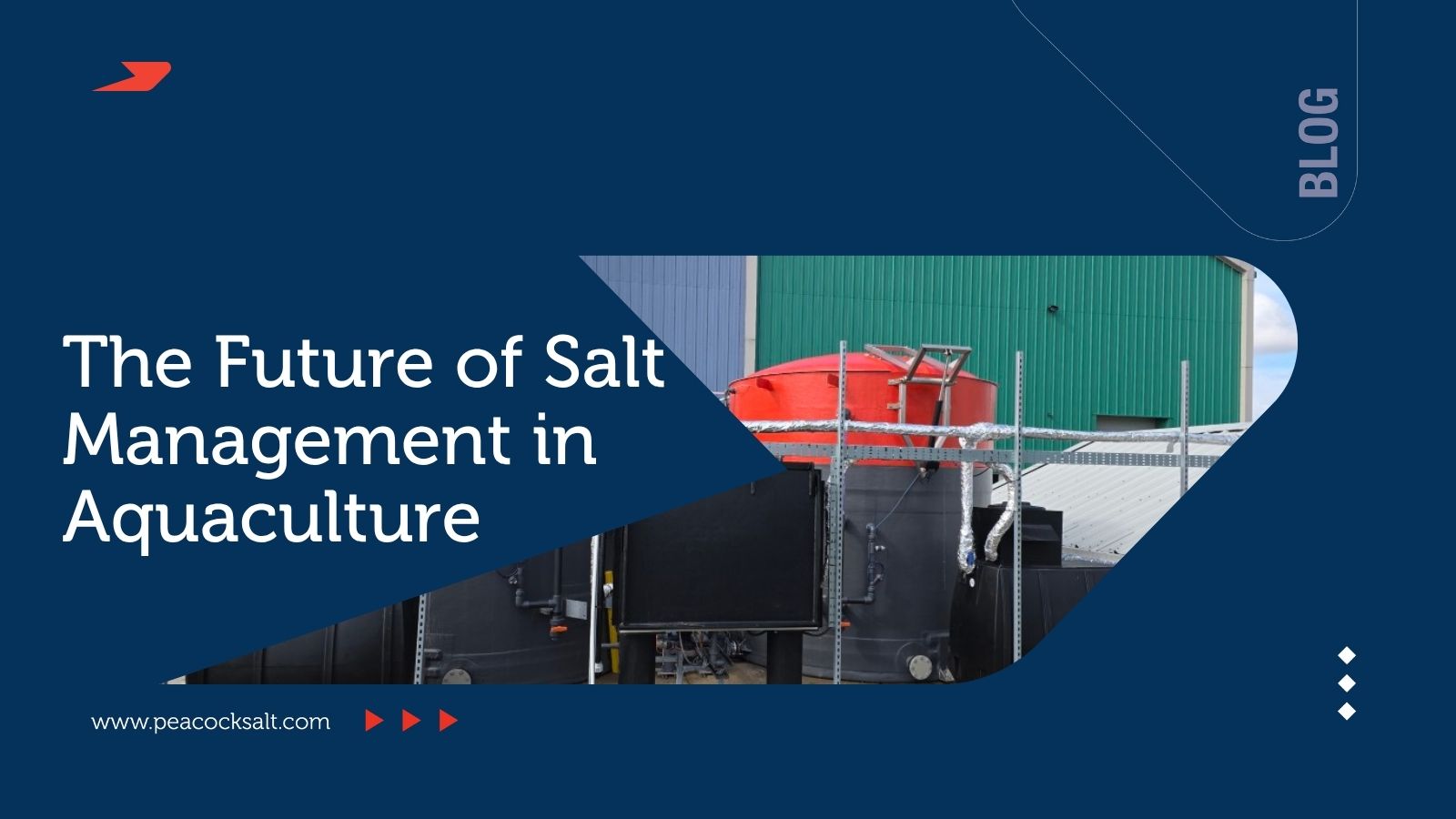
The Future of Salt Management in Aquaculture
Salt Saturators are often associated with winter maintenance and gritting operations but they’re now proving equally valuable in a very different environment, aquaculture.
As the aquaculture industry continues to modernise, producers are looking for smarter ways to improve efficiency, reduce labour demands, and maintain consistent water quality. One area seeing significant innovation is salt and brine management.
For many fish farms and Recirculating Aquaculture Systems (RAS), manual salt dosing is still a common process. Teams can spend hours lifting, handling, and emptying bags into tanks and baths simply to maintain salinity levels. While effective, this approach can be labour intensive, time consuming, and difficult to scale efficiently.
Automatic salt saturators provide a more efficient solution.
Designed to automate brine production on site, salt saturators help aquaculture facilities improve salinity control, reduce manual handling, and streamline operations.
What is a Salt Saturator?
A salt saturator is an automated brine production system designed to create concentrated salt brine on site.
Using an upflow process, water travels through a salt bed while salinity levels are continuously monitored and adjusted until the required concentration is achieved. The concentrated brine can then be transferred and dosed automatically throughout the aquaculture system.
Originally developed for winter road maintenance and de-icing operations, salt saturator technology has now been adapted for use within aquaculture and RAS environments.
Why Salt Management Matters in Aquaculture
Salt plays a critical role in aquaculture water treatment and fish welfare. In RAS systems particularly, accurate salinity management supports:
- Osmoregulation
- Reduced fish stress
- Water chemistry stability
- Fish health and welfare
- Efficient production processes
However, traditional manual salt dosing methods can create several operational challenges.
Common Challenges with Manual Salt Dosing
Many aquaculture sites still rely on teams manually lifting and emptying salt bags into tanks and systems. This can lead to:
- Increased labour requirements
- Manual handling risks
- Inconsistent salinity levels
- Time lost managing salt logistics
- Higher operational costs
- Difficulty scaling production efficiently
Automatic salt saturators help solve these issues by automating the brine production process.
Benefits of Salt Saturators for Aquaculture
Automatic On-Site Brine Production
Salt saturators automatically produce concentrated brine exactly where and when it is needed. This removes the need for manual mixing while ensuring a reliable supply for day-to-day aquaculture operations.
Reduced Manual Salt Handling
Instead of repeatedly lifting and emptying bags by hand, salt can be loaded into the system using a forklift or telehandler. This helps improve health and safety while reducing labour demands.
Accurate and Consistent Salinity Control
Automatic salinity monitoring allows the system to continuously adjust concentrations and maintain consistent brine quality. This provides a more reliable process compared to manual dosing methods.
Consolidated Salt Deliveries
Bulk loading capabilities allow fish farms to streamline salt deliveries, reduce smaller repeat orders, and improve stock management.
Improved Operational Efficiency
By automating brine production and salt dosing, aquaculture teams can spend less time managing salt and more time focused on fish health and production.
Salt Saturators for Recirculating Aquaculture Systems (RAS)
Salt saturators are particularly valuable within Recirculating Aquaculture Systems (RAS), where maintaining stable water chemistry is essential.
Consistent salinity control helps support fish welfare while improving operational reliability across the facility. Automated brine production also allows RAS operators to reduce labour-intensive processes and improve efficiency as operations scale.
As aquaculture technology advances, automated salt management is becoming an increasingly important part of modern fish farming infrastructure.
Proven Brine Technology Adapted for Aquaculture
Peacock Salt’s Multisol upflow saturators are built on proven brine production technology already widely used across UK winter maintenance operations.
With over 140 saturators installed for road de-icing applications, the technology has demonstrated reliable large-scale brine production in demanding environments.
That same proven system is now helping aquaculture facilities modernise salt handling and brine management.
The Future of Salt Management in Aquaculture
As fish farms continue to focus on efficiency, automation, and fish welfare, salt saturators provide a practical solution for modern aquaculture operations.
By reducing manual handling, improving salinity control, and automating brine production, salt saturators help facilities create safer, more efficient, and more scalable processes.
Because the less time spent managing salt, the more time teams can spend focusing on the fish.
Looking for Automatic Salt Saturators for Aquaculture?
Peacock Salt supplies salt saturators and aquaculture salt solutions designed to support modern fish farming and RAS operations.
To learn more about automatic brine production systems and aquaculture salt management, contact the Peacock Salt team today.
Frequently Asked Questions About Salt Saturators in Aquaculture
What is a salt saturator?
A salt saturator is an automated system that produces concentrated brine on site by passing water through a salt bed until the required salinity level is achieved.
How do salt saturators work in aquaculture?
Salt saturators automatically create and store concentrated brine that can then be dosed into aquaculture systems when required. This helps improve salinity consistency while reducing manual handling.
What are the benefits of automatic brine production?
Automatic brine production helps reduce labour requirements, improve dosing accuracy, minimise manual salt handling, and streamline large-scale aquaculture operations.
Are salt saturators suitable for RAS systems?
Yes. Salt saturators are particularly beneficial for Recirculating Aquaculture Systems (RAS), where maintaining stable water chemistry and accurate salinity levels is essential.
Can salt saturators reduce operational costs?
Salt saturators can help reduce labour costs, improve efficiency, consolidate salt deliveries, and minimise product waste through more accurate salinity control.
Why is accurate salinity control important in aquaculture?
Maintaining accurate salinity levels supports fish welfare, osmoregulation, and stable water chemistry throughout aquaculture operations.
What type of salt is used in aquaculture saturators?
High-purity salt products are commonly used to support consistent brine production and maintain water quality within aquaculture systems.
Can salt saturators produce large volumes of brine?
Yes. Modern salt saturators are capable of producing millions of litres of concentrated brine, making them suitable for large aquaculture facilities and expanding fish farming operations.
